
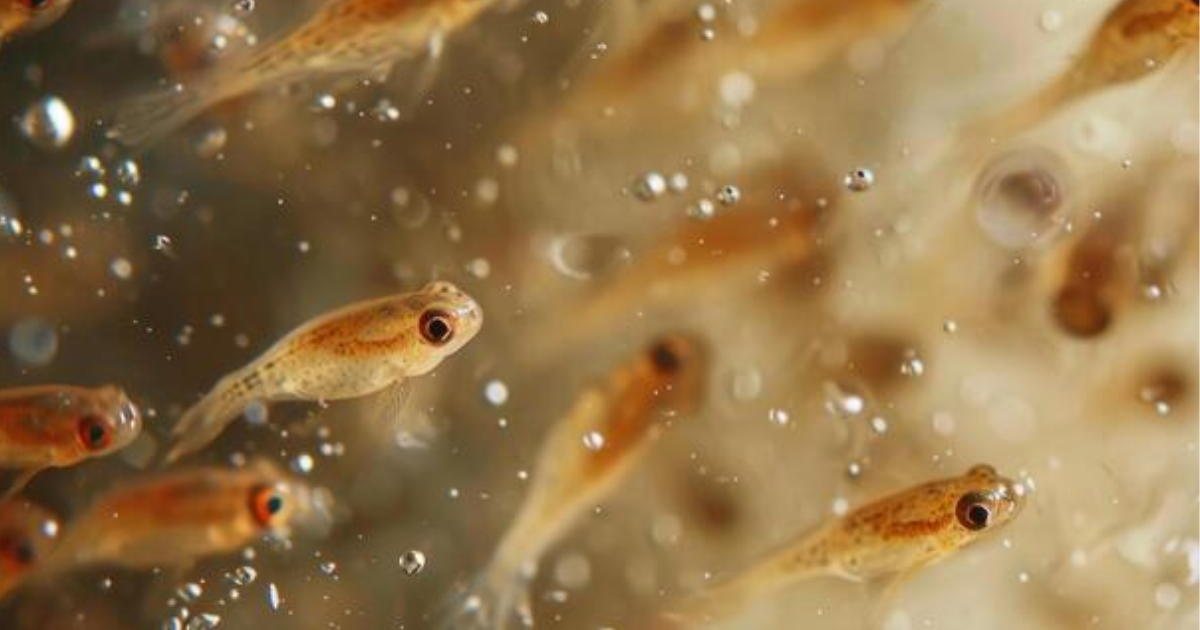
Why Are My Fish Fry Dying? 10 Common Mistakes New Breeders Make
If your fry keep disappearing or you’re finding tiny bodies on the bottom of the tank, you’re not alone. The short answer is: fry are extremely fragile, and most losses come down to a mix of water quality, food, tank mates, and stress, not just “bad luck”.
The good news is that with a few simple changes, you can usually turn things around for your next batch and keep a lot more babies alive.
Are you expecting too many to survive?
Before we get into mistakes, it’s worth saying this clearly: not every fry will make it, even in excellent conditions.
- Livebearers (guppies, mollies, platies) often have 20–60 fry at a time.
- Egg scatterers or egg layers can produce hundreds of eggs.
In nature, most of those would be eaten. In a tank, you see those losses up close, which can feel brutal.
If you’re losing nearly all your fry within a few days or weeks, that usually points to a problem you can fix. If you’re losing some, but many are surviving to a decent size, that’s much closer to normal.
1. Is your water quality actually safe for fry?
This is the number one issue we see in the shop.
Fry are far more sensitive than adults to:
- Ammonia
- Nitrite
- Sudden changes in pH, temperature, or hardness
Even if adults look fine, small spikes can wipe out babies.
What to check
Use a liquid test kit (more accurate than strips) and aim for:
| Parameter | Fry-safe target (most tropical community) |
|---|---|
| Ammonia | 0 ppm |
| Nitrite | 0 ppm |
| Nitrate | Under 20–30 ppm where possible |
| Temperature | Stable, usually 24–26°C (species dependent) |
| pH | Stable within your species’ normal range |
Common problems:
- New tank not fully cycled before breeding starts.
- Overfeeding (especially fine fry food) causing ammonia spikes.
- Skipping water changes because you’re scared of harming fry.
How to fix it
- Cycle the tank fully before breeding; don’t rely on “it’ll be fine”.
- Do small, frequent water changes: 10–20% daily or every other day is often better than a big weekly change.
- Match new water temperature carefully to avoid shocks.
- Use a good dechlorinator every time you add tap water.
The RSPCA and PDSA both emphasise that stable, clean water is essential for fish health and welfare, especially in smaller home aquariums. .
2. Are the parents or tank mates eating the fry?
This is brutally common, especially with:
- Guppies, platies, mollies, swordtails
- Barbs, tetras and many other community fish
- Some cichlids once they stop guarding
Signs this is happening:
- You see plenty of fry one day, then almost none the next.
- Adults chase into plants whenever fry come out.
How to protect fry
You have a few options:
- Separate tank for fry: best option if you’re serious about breeding.
- Breeding box or net: keeps fry with the same water but away from adults.
- Heavy planting: real or artificial plants, moss and hiding spots help, but won’t save all fry.
From experience in the shop, customers who move fry to a dedicated, cycled grow-out tank see the biggest jump in survival.
3. Is your filter too strong or unsafe?
Good filtration is vital, but many filters are designed with adult fish in mind.
Problems we see often:
- Fry get sucked into the filter intake.
- Strong flow exhausts or stresses tiny fish.
- Sponge pre-filters added too late, after losses have already happened.
Fry-safe filtration tips
- Use a sponge filter driven by an air pump in fry tanks.
- If you use an internal or hang-on-back filter, cover the intake with:
- A sponge pre-filter, or
- A fine piece of filter sponge or stocking secured with an elastic band.
- Keep flow gentle; fry shouldn’t be pinned against glass or struggling constantly.
Clean sponges in old tank water (not under the tap) to protect beneficial bacteria.
4. Are you feeding the right food, often enough?
A lot of new breeders try to raise fry on adult flakes or pellets. Most fry either:
- Can’t eat flakes that are too big, or
- Don’t recognise them as food quickly enough.
What fry actually need
- Very small particle size:
- Powdered fry food
- Crushed flake (really crushed between fingers)
- Baby brine shrimp (live or frozen)
- Liquifry/micro foods for egg-layers
- Frequency:
- Tiny amounts 3–5 times per day for the first weeks, not one big feed.
- Clean-up:
- Uneaten food quickly ruins water; siphon debris off the bottom daily.
In shop tanks, we see much better growth and survival when fry are given high-protein, suitable-sized food several times a day, rather than one or two random feeds.
5. Are you overstocking the fry tank?
It’s easy to end up with dozens (or hundreds) of fry in a small space. Too many fry cause:
- Rapid ammonia and nitrate build-up.
- Stunting (they stay small and weak).
- Stress and disease.
Rough space guidelines
This is only a rough guide and varies by species, but for beginners:
| Fry type | Better tank size to aim for |
|---|---|
| Livebearer fry | 40–60 litres for a decent batch |
| Small egg-layer fry | 40+ litres if you’re raising many |
| Larger species fry | Species-specific advice recommended |
If you’re regularly getting more fry than you can house or rehome, it may be kinder to let fewer survive, rather than overstocking and compromising welfare.
6. Could there be a hidden disease or parasite problem?
Fry can be hit hard by illnesses that adults carry quite well, such as:
- External parasites (e.g. white spot/ich).
- Bacterial infections.
- Poor egg quality due to parental disease or inbreeding.
Signs to watch for:
- Fry hanging at the surface and gasping.
- White spots, fuzzy patches or red streaks.
- Fry dying off steadily over days, not just the first 24 hours.
What to do
- Test water first. Rule out water quality before assuming disease.
- Check adults for any symptoms; if parents are sick, their fry often struggle.
- Use medication that is safe for fry (read the bottle carefully or ask in-store).
- Remove obviously sick or dead fry promptly to reduce spread.
If you’re unsure, speak to an experienced aquatics shop or an exotics vet for guidance before medicating heavily.
7. Are you mixing incompatible species?
Not all fish breed, or raise young, in the same way. Common issues:
- Hard water livebearers (guppies, mollies) bred in very soft, acidic water.
- Coldwater species kept too warm, or tropical species kept too cool.
- Aggressive species injuring each other or eating fry.
Every species has:
- A preferred temperature range.
- A preferred pH and hardness.
- Typical behaviour around offspring (parental, neutral, or predatory).
If your fry keep dying and you’re not exactly sure what species you have, or what their requirements are, that’s worth sorting first. Matching water and environment to the species is a big welfare boost.
8. Are your water changes helping or harming?
Water changes are essential, but they can also shock fry if done badly.
Common mistakes:
- Changing a large amount (50%+) with cold tap water.
- Adding untreated tap water directly to the tank.
- Vacuuming the bottom too hard and sucking up fry.
Fry-friendly water change tips
- Change smaller amounts more often (10–20%).
- Pre-warm new water to roughly match the tank.
- Always use a dechlorinator.
- Use airline tubing or a small siphon and watch where you’re vacuuming.
- If you accidentally siphon fry, you can gently return them using a jug or turkey baster.
Done gently, regular small changes are one of the best things you can do for fry health.
9. Is your setup too bare or too bright?
Fry feel safer with:
- Plants (real or silk).
- Moss (Java moss is excellent).
- Hiding spots and cover.
A completely bare, brightly lit tank can stress fry. Stressed fry:
- Hide constantly.
- Eat poorly.
- Grow slowly and die more easily.
Simple tweaks:
- Add floating plants or dim the light slightly.
- Use a dark background or substrate to help them feel more secure.
- Offer clumps of moss or fine-leaved plants for egg-layer fry.
10. Are you breeding from weak or unsuitable parents?
Sometimes the issue starts long before the fry are born.
Problems include:
- Very young or very old parents.
- Inbreeding (brother–sister guppies over many generations).
- Parents already stunted or sick.
This often leads to:
- Small, weak fry that never really thrive.
- Higher deformity rates.
- Fry that die off even in decent conditions.
Choosing better breeding stock
- Pick strong, active, well-shaped adults with no visible defects.
- Avoid repeatedly breeding from related fish if you can.
- Don’t breed fish that are already struggling or have chronic health issues.
Good genetics and healthy parents make fry-raising far easier and kinder.
FOCUS ON THE BASICS, NOT PERFECTION
Is it normal for some fish fry to die?
Yes. Even in very good conditions, some fry losses are normal, especially in the first few days. If you’re losing nearly all of them, then it’s time to check water, food, and tank mates.
Can I leave fry in the main tank with the parents?
How soon should I feed newborn fry?
For livebearers, start feeding within a few hours once they’re swimming freely. For egg-layers, start once they are free-swimming (no longer hanging on glass or substrate). Don’t rely on them “living off the yolk” for long.
How long do I keep fry in a separate tank?
Do i need special equipment to raise fry?
Quick checklist:
Improving fry survival
If your fish fry are dying, work through this list:
- Is the tank fully cycled and stable?
- Are ammonia and nitrite at 0?
- Are adults or tank mates eating the fry?
- Is the filter safe for tiny fish?
- Are you feeding appropriate fry food, little and often?
- Is the tank overcrowded?
- Are there any signs of disease?
- Are you doing small, gentle water changes?
- Do fry have hiding places and cover?
- Are the parents healthy and suitable for breeding?
Tackling the basics first usually makes the biggest difference.