How often should you feed fish?
Most aquarium fish should be fed once or twice a day in small amounts that they can eat within 2–3 minutes. The exact feeding routine depends on the species, age, water temperature, and type of food being used.
Overfeeding is one of the most common problems we see in home aquariums. Feeding too much can quickly affect water quality, stress fish, and lead to health problems.
How many times a day should you feed fish?
For most tropical and coldwater community fish, feeding little and often works best.
A good general guide is:
- Adult tropical fish: 1–2 small feeds daily
- Goldfish: 1–2 small feeds daily
- Marine fish: 2–3 smaller feeds daily
- Young or growing fish: 2–4 small feeds daily
- Bottom feeders and nocturnal fish: Often best fed in the evening
Fish have small stomachs, and in the wild they would spend much of the day grazing or hunting for tiny amounts of food.
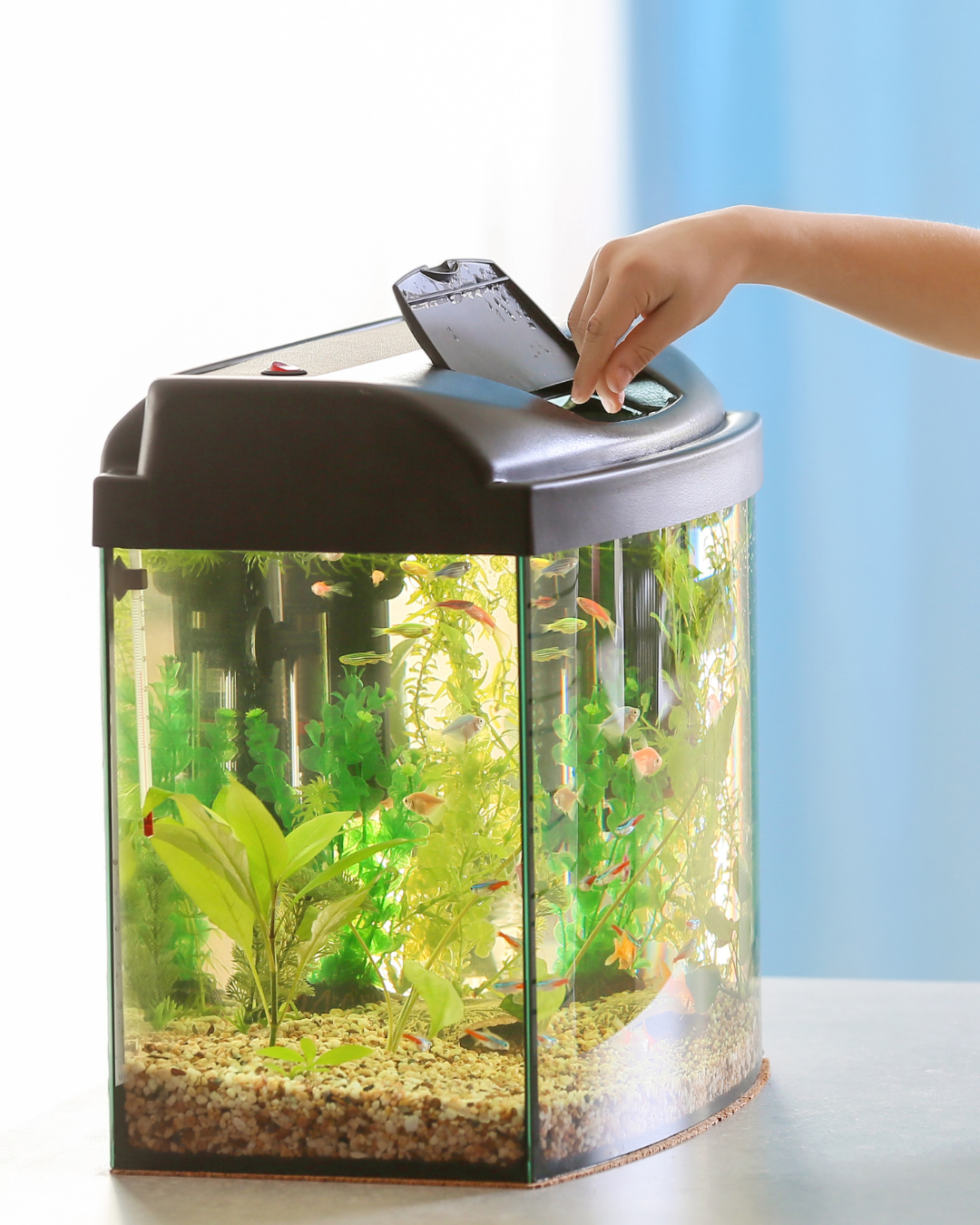
How much food should I give my fish?
Only feed what your fish can fully eat within a few minutes.
A simple rule:
- Add a small pinch
- Watch carefully
- Remove uneaten food after 5 minutes if needed
If food is sinking untouched or sitting in the filter, you are probably feeding too much.
Different foods absorb water differently, so portion sizes vary between:
- Flakes
- Pellets
- Frozen food
- Live food
- Algae wafers
It is always safer to slightly underfeed than overfeed.
What happens if you overfeed fish?
Overfeeding causes more aquarium problems than underfeeding.
Common issues include:
- Poor water quality
- High ammonia levels
- Algae growth
- Cloudy water
- Blocked filters
- Obesity in fish
- Digestive problems
Uneaten food breaks down quickly in aquarium water, especially in warmer tropical tanks.
If your tank constantly looks dirty shortly after feeding, it is worth reducing portions and checking your maintenance routine.
Can fish go a few days without food?
Healthy adult fish can usually go several days without feeding.
Most aquarium fish can comfortably manage:
- A weekend away without food
- 2–3 days during short trips
Many fishkeepers actually overestimate how much fish need feeding.
For longer holidays:
- Ask someone experienced to feed them
- Pre-portion food clearly
- Avoid telling someone to “just feed a bit”
- Consider an automatic feeder for longer trips
Should different fish be fed differently?
Yes. Different species have different diets and feeding habits.
Examples include:
- Surface feeders prefer floating foods
- Bottom feeders need sinking pellets or wafers
- Herbivores need more plant-based foods
- Predatory fish may require frozen or protein-rich diets
Community tanks often need a mix of foods to ensure all fish are eating properly.
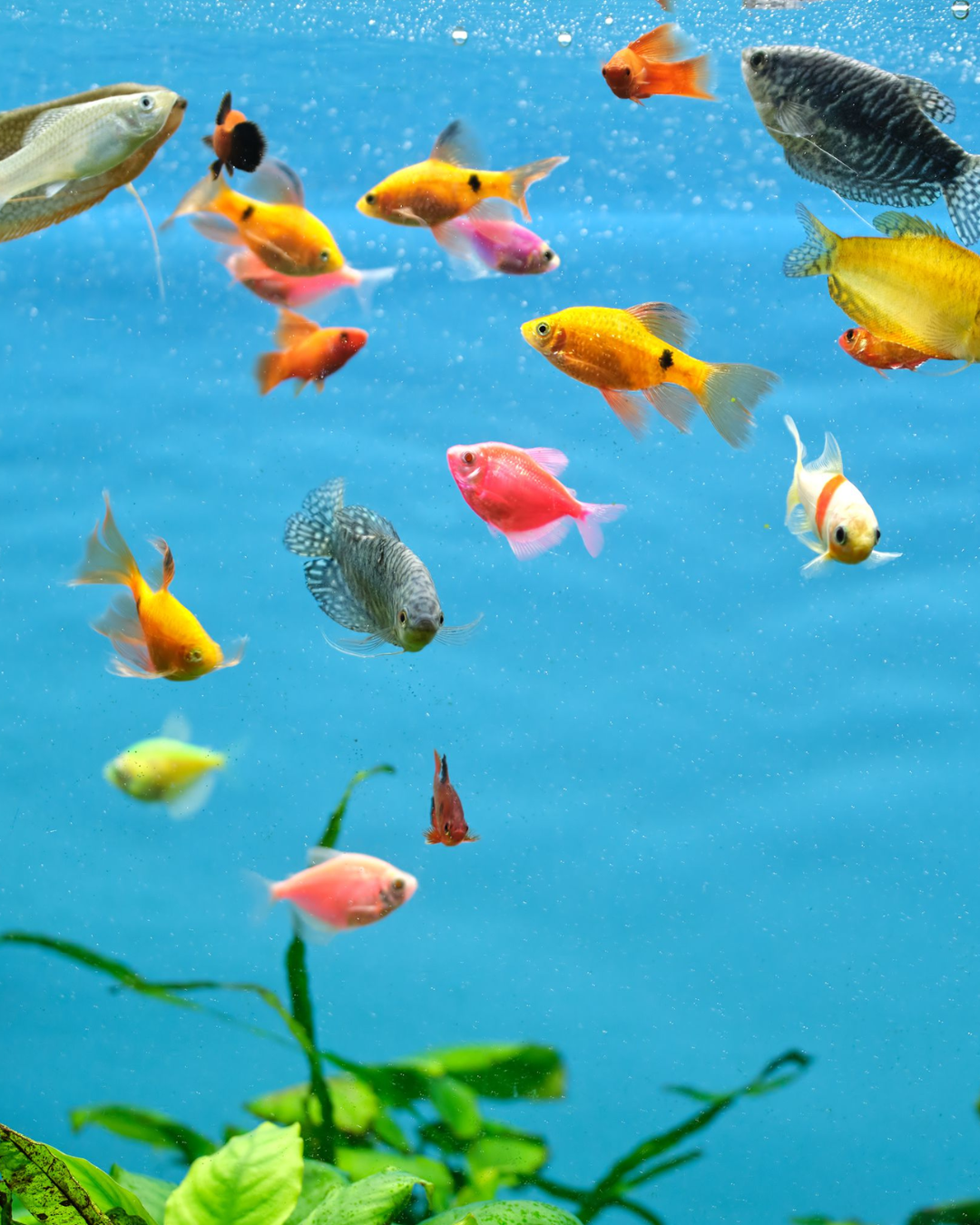
How do I know if my fish are hungry?
Fish often appear eager for food whenever someone approaches the tank, but this does not always mean they are hungry.
Signs your fish are feeding well include:
- Active behaviour
- Bright colours
- Steady growth
- No food left uneaten
- Healthy body condition
Constant bloating, lethargy, or excessive waste can suggest overfeeding.
What foods are best for aquarium fish?
A varied diet is usually best.
Popular options include:
- Quality flakes
- Pellets
- Frozen foods
- Live foods
- Vegetable-based foods
- Algae wafers
Choose food suitable for your specific species rather than using one food for every fish.
What is the best time of day to feed fish?
Consistency is more important than exact timing.
Most fishkeepers feed:
- Once in the morning
- Once in the evening
Try to feed around the same times each day where possible.
Avoid feeding immediately after:
- Large water changes
- Adding new fish
- Major tank maintenance
Fish may be stressed and less likely to eat normally.
Should you have a fasting day for fish?
Some keepers choose to skip feeding one day each week, especially with goldfish or fish prone to digestive issues.
This can:
- Reduce waste build-up
- Support digestion
- Help prevent overfeeding
Healthy adult fish generally cope very well with occasional fasting days.
When should I contact a vet?
Speak to an aquatic vet if your fish show:
- Loss of appetite lasting several days
- Swollen abdomen
- Floating problems
- Rapid breathing
- White spots or sores
- Sudden weight loss
- Multiple fish becoming ill
Feeding problems are sometimes linked to underlying disease or poor water conditions.
Can you feed fish too much?
Yes. Overfeeding is one of the main causes of poor aquarium water quality and fish health problems.
Do fish know when to stop eating?
Many fish will continue eating if food is available, even when they do not need it, which is why portion control is important.