
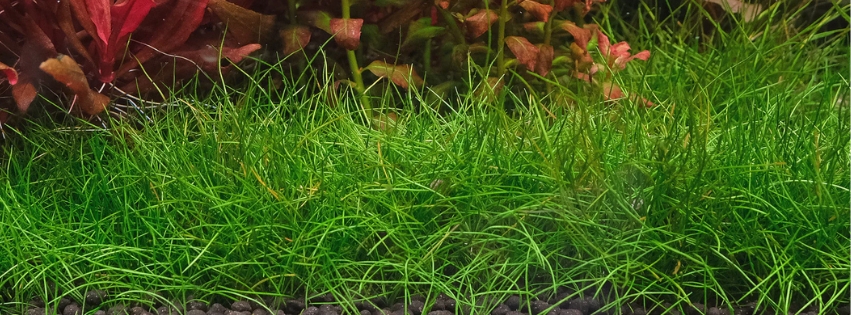
Hair Grass Overview
Scientific Name: Eleocharis parvula, Eleocharis acicularis
Common Name(s): Dwarf Hairgrass, Hair Grass, Needle Spikerush
Origin: Worldwide (North America, Europe, Asia)
Plant Type: Carpeting/foreground plant
Typical Height: 3–15 cm (depending on species and conditions)
Difficulty Level: Easy to Medium
Lighting: Medium to High
Temperature: 18–28°C
Hair grass is a classic foreground plant widely used in planted aquariums to create lush, natural-looking carpets. Found growing along riverbanks, wetlands, and shallow waters in the wild, it forms dense grassy patches that sway gently in the current. In aquascaping, hair grass is popular for its fine, grass-like blades and ability to replicate natural meadows, making it ideal for creating depth and realism in freshwater aquariums.
Aquarium Requirements
-
Lighting Requirements:
Medium to high lighting is recommended. Higher light levels promote faster spreading and a denser carpet, while lower light may result in slower, patchy growth.Temperature Range:
18–28°C, making it suitable for most tropical freshwater aquariums.pH Range:
6.0–7.5 (slightly acidic to neutral preferred)Placement in Tank:
Primarily used as a foreground plant, though taller varieties can work in the midground.Growth Rate:
Moderate, becoming fast under optimal lighting and CO₂ conditions.Substrate, Fertilisation & CO₂:
- Fine, nutrient-rich substrate or aquasoil is ideal for root spread
- Root tabs and liquid fertilisers help maintain healthy growth
- CO₂ injection is highly beneficial for achieving a dense, carpeted effect, though it can grow without it at a slower pace
Growth and Appearance
Hair grass features thin, upright blades resembling a miniature lawn. Its soft, flowing appearance adds a natural and calming aesthetic to any aquascape.
- Leaf Structure: Fine, needle-like green blades
- Colour: Bright to deep green depending on lighting and nutrients
- Growth Pattern: Spreads via runners, gradually forming a carpet
Submerged Growth:
Shorter, softer blades that spread horizontally to form dense carpets.
Emersed Growth:
Taller, more rigid blades, often used in nurseries before being transitioned into aquariums.
In aquascaping, hair grass is often used to simulate grassy plains, riverbanks, or open fields, adding texture and movement to the layout.
Care and Maintenance
Hair grass is relatively straightforward to care for with the right setup:
- Trim regularly to maintain a low, even carpet and encourage lateral growth
- Thin out dense patches to prevent die-off underneath
- Maintain stable water parameters to avoid melting or browning
- Dose fertilisers consistently, especially in high-light setups
- Ensure good water flow to distribute nutrients evenly
With patience and proper care, hair grass will spread and create a lush, professional-looking foreground.
Aquascaping with Hair Grass
Hair grass is a staple in many aquascaping styles:
- Perfect as a foreground plant for carpeting in planted aquariums
- Can be used in the midground for a taller grass effect (with Eleocharis acicularis)
- Ideal for nature-style and Iwagumi aquascapes
- Creates contrast against rocks, driftwood, and larger-leaved plants
- Enhances depth and scale, making tanks appear larger and more natural
It pairs beautifully with mosses, stem plants, and low-growing carpeting species to create balanced and visually appealing layouts.
Hair Grass at Smiths Aquatics
At Smith’s Aquatics in Stockton-on-Tees, we regularly stock a variety of live aquarium plants, including Hair Grass (Eleocharis spp.).
Our team can help you with:
□ Choosing suitable plants for your aquarium
□ Advice on lighting and plant nutrition
□ Selecting plants compatible with your fish and setup
□ Creating balanced planted aquariums
Visit our store to explore our current selection of live aquarium plants and find the right species for your aquarium.