
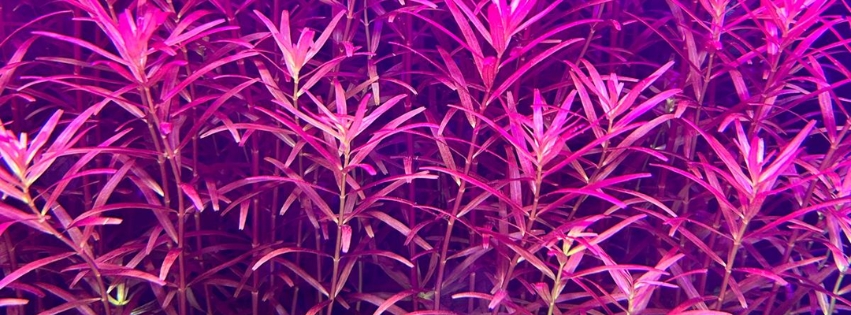
Rotala Overview
Scientific Name: Rotala Rotundifolia
Common Name(s): Rotala, Dwarf Rotala, Red Rotala
Origin: Southeast Asia (India, China, Vietnam, and surrounding regions)
Plant Type: Stem plant (background/midground aquarium plant)
Typical Height: 20–50 cm (can be trimmed shorter)
Difficulty Level: Easy to Medium
Lighting: Medium to High
Temperature: 22–28°C
Rotala is one of the most popular stem plants in the freshwater aquarium hobby thanks to its fast growth and striking colour variation. In nature, it grows in wetlands and slow-moving waters across Asia. In aquariums, it is prized for its delicate, narrow leaves and ability to transform from lush green to vibrant pinks and reds under strong lighting. Its versatility makes it a favourite in both beginner and advanced aquascaping setups.
Aquarium Requirements
Lighting Requirements:
Rotala thrives under medium to high lighting. Strong lighting encourages compact growth and enhances red/pink colouration, making it a standout feature in planted aquariums.
Temperature Range:
22–28°C, with stable conditions preferred for consistent growth.
pH Range:
6.0–7.5 (slightly acidic to neutral is ideal)
Placement in Tank:
Best used as a midground to background plant in most aquascapes.
Growth Rate:
Fast-growing under optimal conditions, requiring regular trimming.
Substrate, Fertilisation & CO₂:
- A nutrient-rich aquasoil or fine gravel substrate supports healthy root development
- Regular liquid fertilisers (especially nitrate, phosphate, and iron) improve colour and density
- CO₂ injection is highly recommended for vibrant colouration and compact growth, although not essential
Growth and Appearance
Rotala features slender, delicate stems with small, oval to needle-like leaves arranged in whorls along the stem. Its appearance varies significantly depending on lighting and nutrient levels.
- Low light: Light green, looser growth pattern
- High light + CO₂: Dense, compact stems with pink to deep red tops
When grown emersed (above water), Rotala tends to produce slightly thicker leaves and more upright growth, often with a greener appearance.
In aquascaping, it is commonly used to create soft, flowing background "bushes" or colourful contrast against darker hardscape materials such as driftwood and stone.
Care and Maintenance
Rotala is relatively easy to maintain but benefits from consistent care:
- Regular trimming encourages bushier, denser growth
- Remove older or lower leaves to prevent shading and decay
- Maintain stable water conditions to avoid melting or leggy growth
- Dose fertilisers weekly to support rapid stem development
- Replant trimmed tops to create fuller plant groups over time
With proper maintenance, Rotala quickly fills out and creates a lush, professional aquascape appearance.
Aquascaping with Rotala
Rotala is highly versatile and widely used in planted aquarium design:
- Ideal as a background plant to create height and depth
- Can be grouped in the midground for layered aquascapes
- Perfect for Dutch-style aquascapes due to its colour variation
- Provides strong contrast against green carpeting foreground plants
- Works beautifully with driftwood and stone hardscape layouts
It pairs especially well with plants like Hemianthus, Cryptocoryne, and Anubias, helping create a balanced and natural underwater environment.
Rotala at Smiths Aquatics
At Smith’s Aquatics in Stockton-on-Tees, we regularly stock a variety of live aquarium plants, including Rotala.
Our team can help you with:
□ Choosing suitable plants for your aquarium
□ Advice on lighting and plant nutrition
□ Selecting plants compatible with your fish and setup
□ Creating balanced planted aquariums
Visit our store to explore our current selection of live aquarium plants and find the right species for your aquarium.